
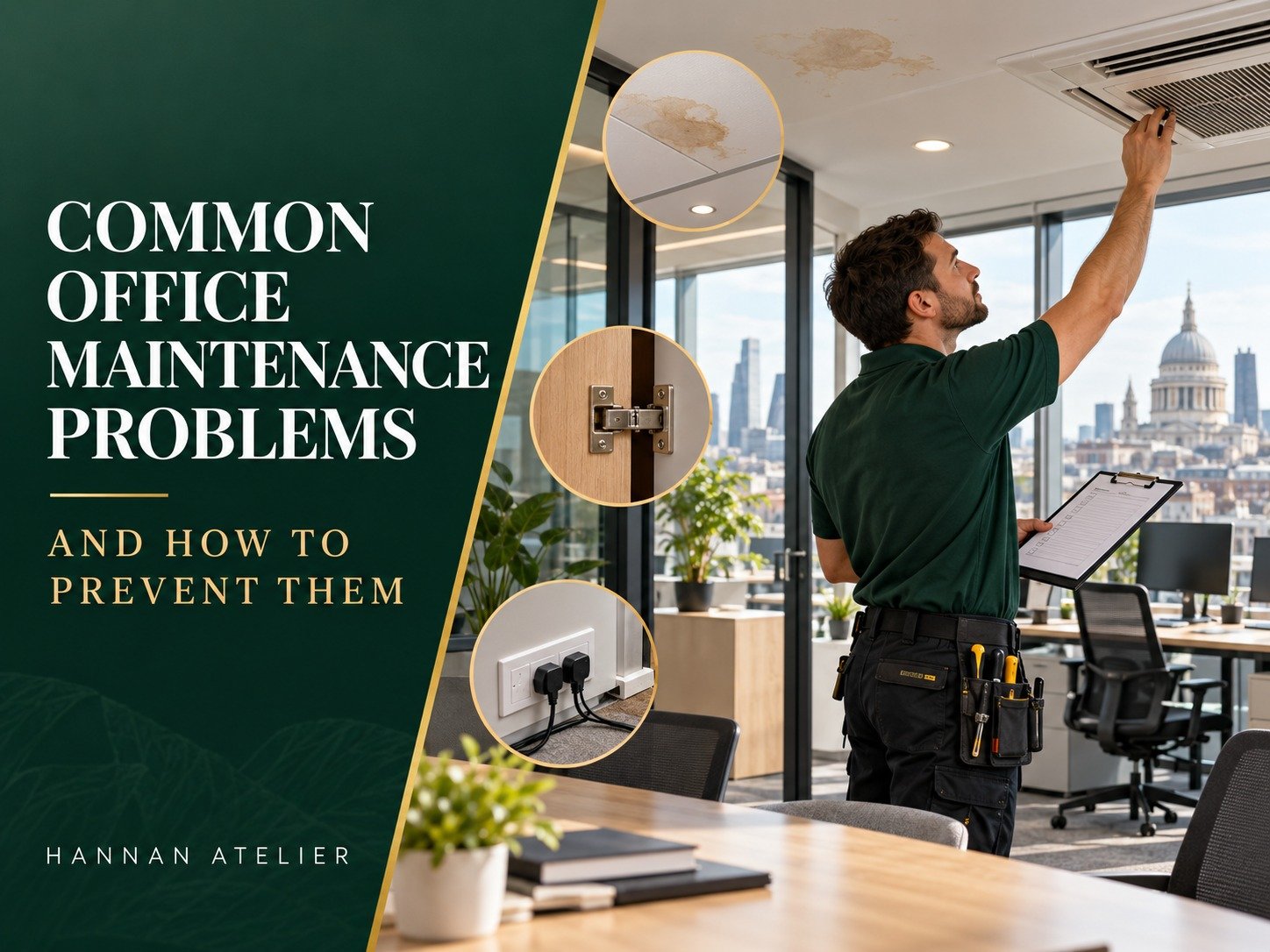

Common Office Maintenance Problems
and How to Prevent Them
Common Office Maintenance Problems
and How to Prevent Them
Every office, no matter how well-run, runs into maintenance issues eventually. A flickering light that
never gets replaced, a radiator that stops working in the middle of winter, a leaking tap that slowly
stains the cabinet underneath — these problems rarely show up all at once. They build quietly in the
background until something finally forces attention, usually at the most inconvenient moment.
The good news is that most office maintenance problems are predictable. The same handful of
issues show up again and again across workplaces of every size, and nearly all of them can be caught
early with the right routine in place. This guide walks through the most common problems offices
run into, what typically causes them, and how consistent upkeep — whether handled in-house or
through professional office maintenance services in London — keeps small issues from turning into
expensive disruptions.
Why Office Maintenance Gets Overlooked
Maintenance is rarely anyone’s top priority until something breaks. Most offices are focused on dayto-day operations, and unless a specific person is responsible for the building itself, small issues tend
to fall through the cracks. A flickering bulb gets noticed by everyone but reported by no one. A slow
drain is mildly annoying but never urgent enough to actually book a plumber. Over time, these small,
unaddressed issues accumulate, and what could have been a five-minute fix becomes a genuine
repair job.
This is the core argument for proactive maintenance: it’s not about preventing every possible
problem, but about catching the common ones early, before they escalate into something that costs
more time, money, and disruption than it ever needed to.
1. HVAC Issues
Heating, ventilation, and air conditioning systems are among the most common sources of office
maintenance complaints — and also among the most expensive to fix once a small issue becomes a
full system failure.
Common problems:
● Inconsistent temperatures between rooms or floors
● Poor airflow or weak ventilation
● Unusual noises from units or ductwork
● Rising energy bills with no clear explanation
Prevention:
● Replace or clean air filters regularly — a clogged filter is one of the most common causes of
reduced HVAC performance and higher energy costs
● Schedule professional servicing at least once or twice a year, ideally before peak summer
and winter use
● Keep vents and ducts clear of dust and debris, which also improves indoor air quality
● Address unusual noises immediately rather than waiting for the system to fail outright, since
early intervention is almost always cheaper than an emergency repair
Plumbing Leaks and Drainage Problems
Plumbing issues are deceptively easy to ignore because they often start small — a slow drip, a
sluggish drain — and only become urgent once they’ve caused visible damage.
Common problems:
● Dripping taps and worn faucet washers
● Slow or blocked drains in kitchens and washrooms
● Minor leaks under sinks that go unnoticed until cabinetry is damaged
● Toilets that run continuously, wasting water and increasing utility costs
Prevention:
● Check under-sink connections periodically for drips or loose fittings
● Clear slow drains before they become fully blocked, rather than waiting for a backup
● Replace worn washers and fittings as soon as dripping starts
● Include plumbing spot-checks as part of a routine maintenance visit rather than waiting for a
tenant or staff complaint
These are exactly the kind of small, contained fixes covered under light maintenance services — for a
fuller breakdown of what that typically includes, see our guide on what’s included in light property
maintenance services.
3. Electrical Faults
Electrical issues in an office range from minor annoyances to genuine safety hazards, which makes
them one of the categories where prevention matters most.
Common problems:
● Flickering or failing lights
● Overloaded outlets or power strips
● Tripped circuit breakers with no obvious cause
● Faulty wiring in older buildings
Prevention:
● Replace burnt-out bulbs promptly rather than letting fixtures sit empty
● Avoid daisy-chaining power strips, which increases the risk of overload
● Have an electrician investigate recurring breaker trips rather than simply resetting them
each time
● Schedule periodic electrical inspections, particularly in older office buildings where wiring
may not meet current standards
Electrical safety isn’t just about convenience — UK workplaces are required to maintain electrical
systems in a safe condition under general health and safety law, and the Health and Safety Executive
(HSE) provides guidance on what regular inspection and maintenance should look like for
commercial premises.
4. Flooring Damage and Wear
Office floors absorb constant foot traffic, and the damage builds up gradually enough that it’s easy
not to notice until it’s significant.
Common problems:
● Worn or peeling carpet edges, particularly near entrances
● Scuffed or dulled hard flooring
● Loose tiles or floorboards
● Stains that have set in and become difficult to remove
Prevention:
● Use entrance mats to reduce the dirt and moisture tracked in from outside
● Address spills and stains immediately rather than letting them set
● Schedule periodic deep cleaning for carpets and hard floors to remove embedded dirt
before it causes lasting wear — our guide on what a commercial deep clean includes covers
exactly what this involves, including carpet extraction and floor stripping
● Repair loose tiles or boards as soon as they’re noticed, since they’re both a trip hazard and a
problem that tends to worsen with continued foot traffic
5. Broken or Sticking Doors and Hardware
Doors and hardware take constant daily use, and small issues here are some of the most common —
and most commonly ignored — maintenance problems in any office.
Common problems:
● Squeaky hinges
● Doors that stick, don’t close fully, or don’t latch properly
● Loose doorknobs or handles
● Broken or unreliable door closers, particularly on fire doors
Prevention:
● Lubricate hinges periodically to prevent squeaking and stiffness
● Adjust doors that have started to stick before the issue worsens
● Tighten loose hardware as soon as it’s noticed
● Pay particular attention to fire doors, since a door that doesn’t close and latch properly
undermines a critical safety feature
6. Pest Issues
Office kitchens, break rooms, and storage areas create exactly the conditions pests look for — food,
warmth, and quiet, undisturbed spaces.
Common problems:
● Pests attracted to food left in kitchens or at desks
● Entry points around doors, windows, or utility penetrations
● Infestations that go unnoticed until they’re well established
Prevention:
● Keep kitchens and break rooms clean, with food waste disposed of regularly rather than left
to accumulate
● Seal obvious entry points around doors, windows, and pipework
● Schedule periodic pest control inspections as a preventative measure rather than waiting for
an active problem
● Store food in sealed containers rather than open packaging
7. Safety Equipment Failures
Safety equipment is easy to overlook precisely because it’s rarely used — which is exactly why it
needs regular checking.
Common problems:
● Smoke detectors with dead or missing batteries
● Fire extinguishers past their inspection date
● Emergency lighting that doesn’t activate during a power cut
● Blocked fire exits or obstructed emergency equipment
Prevention:
● Test smoke and carbon monoxide detectors regularly and replace batteries proactively
rather than waiting for a warning chirp
● Keep fire extinguisher inspections up to date and visibly tagged
● Test emergency lighting periodically to confirm it activates correctly
● Keep fire exits and access to safety equipment clear at all times, as part of routine
housekeeping rather than an occasional check
8. Kitchen Appliance Breakdowns
Shared kitchen appliances see heavy, constant use, and a lack of basic upkeep is one of the most
common reasons they fail earlier than expected.
Common problems:
● Microwaves and coffee machines breaking down from built-up grime or mineral deposits
● Dishwashers not draining properly due to filter buildup
● Refrigerators running inefficiently due to dust buildup on coils or seals
Prevention:
● Clean appliance interiors regularly, not just the exterior surfaces
● Descale coffee machines and kettles on a set schedule to prevent limescale buildup
● Check dishwasher filters and seals periodically
● Include appliance interiors as part of a scheduled deep clean rather than leaving them until
something stops working
Exterior and Building Envelope Issues
Problems outside the building are just as common as those inside, and they’re often noticed even
later, since fewer people are paying attention to exterior upkeep day to day.
Common problems:
● Clogged gutters and downspouts leading to water damage
● Cracked or uneven walkways creating trip hazards
● Faulty exterior lighting around entrances
● Loose railings or steps
Prevention:
● Clear gutters and downspouts on a regular schedule, particularly after autumn leaf fall
● Inspect walkways periodically for cracks or uneven surfaces
● Replace exterior bulbs promptly to maintain visibility and safety around entrances
● Tighten loose railings as soon as they’re identified, since these are a direct safety concern
Building a Preventative Maintenance Routine
The common thread across nearly every problem above is the same: small issues, left unaddressed,
become bigger and more expensive ones. A preventative maintenance routine is the most reliable
way to stay ahead of this pattern, and it doesn’t need to be complicated to be effective.
A few principles worth building into any office’s approach:
● Schedule regular walk-throughs. Someone — an office manager, facilities lead, or
maintenance provider — should periodically check common problem areas: kitchens,
washrooms, HVAC systems, safety equipment, and exterior spaces.
● Keep a maintenance log. A simple record of what’s been checked, fixed, or flagged makes it
far easier to spot recurring issues and plan ahead, rather than relying on memory or
scattered complaints.
● Don’t wait for complaints. By the time staff are complaining about a flickering light or a slow
drain, the issue has usually been building for a while. Proactive checks catch problems
before they’re disruptive enough to prompt a complaint.
● Pair maintenance with cleaning. Many maintenance issues — appliance wear, flooring
damage, pest problems — are closely tied to cleanliness. A consistent cleaning routine, like
the one outlined in our office cleaning checklist for small London businesses, supports
maintenance efforts rather than working separately from them.
Why Professional Office Maintenance Services Matter in London
London offices face a particular set of challenges that make professional maintenance support
especially valuable: older building stock in many parts of the city, heavy foot traffic in commercial
districts, and the practical difficulty of fitting maintenance work around a busy working day.
Professional office maintenance services in London typically offer:
● Scheduled, recurring visits that catch issues before they escalate, rather than reactive
callouts after something has already broken
● Out-of-hours servicing, allowing HVAC checks, electrical inspections, and repairs to happen
without disrupting the working day
● A single point of contact for the wide range of issues covered in this guide, rather than
coordinating separate tradespeople for every individual problem
● Familiarity with London-specific factors, such as older building infrastructure, hard water
affecting plumbing fixtures, and local compliance requirements
For a small or mid-sized office, the cost of a regular maintenance contract is almost always lower
than the cumulative cost of reactive repairs — emergency callouts, water damage from an ignored
leak, or the disruption of an HVAC system failing in the middle of a heatwave.
Final Thoughts
Most office maintenance problems follow a predictable pattern: a small, manageable issue that gets
ignored until it becomes a larger, costlier one. HVAC inefficiencies, plumbing drips, flickering lights,
worn flooring, pest risks, and safety equipment lapses are all common — but all of them are also
preventable with a consistent, proactive routine.
Whether you manage maintenance in-house with a regular checklist or bring in professional office
maintenance services in London to handle it on a scheduled basis, the underlying principle is the
same: catching problems early is always cheaper, safer, and less disruptive than waiting for them to
become urgent. Building that routine now is the simplest way to avoid dealing with an emergency
later.